Article
He Asked the Hard Question 20 Years Ago. We’re Still Living the Answer.
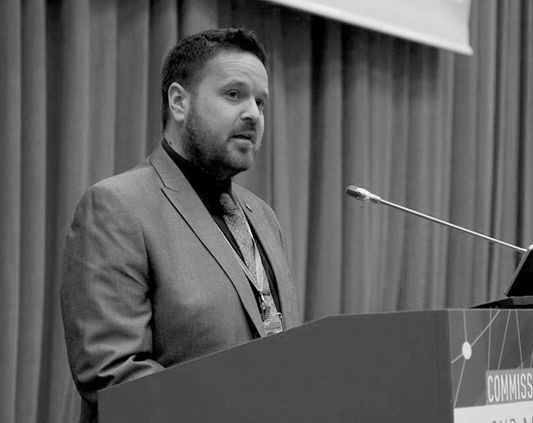
This February 23rd marks what would have been Dr Robert Carr’s 63rd birthday. To honour his memory, we sat down with his sister, Carolyn Carr–Ragland, who shared a deeply personal reflection on what drove her brother into the heart of the Caribbean HIV movement, and why his work still matters more than ever.
When Robert Carr started working on HIV in the Caribbean, something striking was true: nobody really knew what was happening. Not the governments. Not the international organisations. Not the donors writing the cheques.
No one knew exactly how HIV and AIDS patients were being cared for in the Caribbean islands, his sister Carolyn recalls. It was a well-kept secret.
So, Robert did something simple, and something brave. He went to find out.
First, He Found the People
The donor world wanted numbers. Statistics. Data that they could compare and present at conferences. Robert understood that, and so he went looking for data. But here’s the thing: to collect data, you first must find the people. And finding people living with HIV in the Caribbean, along with the caregivers quietly looking after them, was not straightforward. These were communities that had been pushed to the edges, largely uncounted and unseen. Robert went to meet them anyway. He spoke with them. He listened. He highlighted their individual stories. And that, Carolyn says, was the key that unlocked everything.
Moving the Conversation Forward
Once the numbers existed, Robert did not stop there. He used those stories and the data he had gathered to shift what the conversation was even ‘about’, moving it from infection statistics to something deeper, the medications people needed, and the civil rights and human rights of everyone affected.
He also uncovered something that would go on to shape his life’s work. There was no stable group of people on the ground, no reliable community infrastructure that could consistently show up for HIV patients over time. Funding would come and go. Programmes would start and stop. But the people remained, often without support.
This discovery drove him toward fighting for what is now called core funding, a sustained, reliable investment at the community level that allows local organizations to actually do their work, year after year, without disappearing when a project ends.
Today, RCF grantees across 130+ countries are proving exactly why core funding matters.
In Eastern Europe and Central Asia, networks are running decriminalization campaigns fighting to remove the legal barriers that push people away from care. In the Caribbean, the Caribbean Vulnerable Communities Coalition is building social enterprises, so communities are not heavily dependent on one donor’s priorities. Across multiple regions, communities are doing their own monitoring, collecting data, identifying gaps,
and holding health systems accountable. In prisons, youth-led clubs are delivering vocational training and health advocacy where services barely exist. Over 20 networks reported positive legal or policy changes in 2022 alone, directly linked to their advocacy work. Reliable funding for local organizations also ensures that people can get to clinics and get the care that is needed. This is what core funding makes possible.
Why Is This Still Relevant?
That fight for community funding is still very much alive today. Across the Caribbean and around the world, local organizations led by and for the people most affected by HIV are still making the case for sustained support, not just project funding, but the kind of funding that lets them stay.
Robert Carr saw this need before most people were even asking the question.
On his birthday, the Robert Carr Fund collective remembers a man who started with data but always kept people at the core. Who went looking in the places others had not thought to look. And who understood that counting people is only meaningful if you are also committed to fighting for them.
What the Caribbean was saying to the world
What is most striking about Robert’s work is that he was not just uncovering a problem that was unique to the Caribbean. The same issue was happening in Uganda, in India, in Papua New Guinea, and even across Latin America. Communities were being left behind, funding came and went, and there were no stable group of people on the ground who could just stay and see it through. Robert happened to see it early, in a region the world was not paying much attention to, and he said it loudly.
And right now, with funding for HIV stretched and, in some cases, completely cut, difficult decisions are being made about who gets what and where. The same community-led organizations Robert fought for are the ones feeling the impact the most. Decades later, we are still asking the question he never stopped asking: What happens when the project grants run out?
On his birthday, that question feels more urgent now than ever.
Happy birthday, Dr Robert Carr. The fight continues.