From Community Evidence to Parliament: Core Flexible Funding in Action
How community-led evidence and flexible funding helped move Kenya's first harm-reduction Bill from long-term advocacy into Parliament.
Five community-led networks launched Rise & Decriminalize Movement to jointly advocate for decriminalization of the inadequately served populations in the EECA region.
Rise & Decriminalize Movement is tailored to commonly advocate for the rights of LGBTQI+, people who use drugs, women living with HIV, and sex workers.
The Movement unites regional networks, supported by the Robert Carr Fund:
In EECA countries, there are strong tendencies to criminalize behavior or a way of life that the majority does not like, such as sexual preferences, specific appearance, provision of sexual services, substance use, or sex/family life in the presence of a disease (HIV). Sometimes, it can all be about the same person.
In light of previous successful campaigns, where several communities united for common goal, for example, “Chase the Virus not People”, the premise behind the Rise & Decriminalize Movement is intersectionality – all groups of key populations are interconnected, one person can belong to several vulnerable groups at a time. This provides a unique opportunity to build the decriminalization advocacy for one group on the results of the other group, support each other in campaigns.
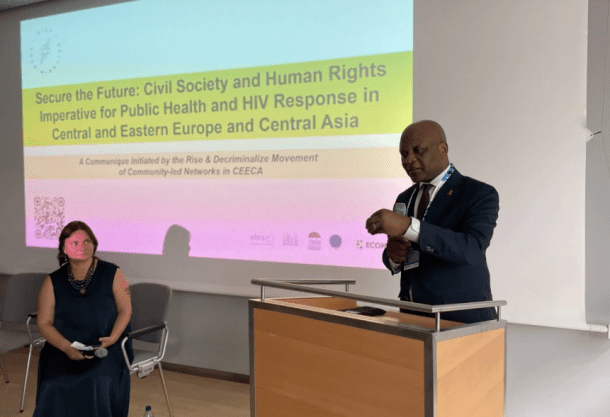
“Bad policies and bad laws are bad, simply regardless of where they are. They must be fought”, said the Ambassador Dr. John N. Nkengasong, Ambassador-at-Large and Coordinator of United States Government Activities to Combat HIV/AIDS, PEPFAR, at the event organized by the Rise & Decriminalize Movement at the 25th International AIDS Conference.
The Rise & Decriminalize Movement builds on four pillars encompassing their decriminalization activities:
It is planned to develop a common position of the Rise & Decriminalize Movement, in the process of which the networks will define the common background for advocacy relevant for all communities and identify issues that are separate for each community.
The Movement Communique has been already supported by 35 organizations and 12 individuals.
Read more about this initiative at the Movement web-site.
How community-led evidence and flexible funding helped move Kenya's first harm-reduction Bill from long-term advocacy into Parliament.

Three MENA networks strengthening community leadership, influence, and access to HIV financing across the region.

AGCS plus strengthens rights advocacy, partnerships, and community voices across Francophone West and Central Africa.