Persistence in Hard Times: MENA Networks Holding Ground in the Global Fund

Three MENA networks strengthening community leadership, influence, and access to HIV financing across the region.
Year 1 milestone. Kenya’s first stand-alone harm-reduction legislation was introduced in Parliament as a Private Member’s Bill by Hon. Esther Passaris, Nairobi Woman Representative, drafted with community input from people who use drugs. The First Reading took place on 1 October 2025, with committal to the relevant Departmental Committee. A First Reading is procedural movement, not a formal government commitment to the substance of the Bill, the Bill is introduced and committed to committee without debate on substance. WRADA’s 2025 work on this Bill is reported at the Early action and Advanced Action tiers of the O2 framework in Section 4.
The Harm Reduction Bill, 2025 (National Assembly Bill No. 37 of 2025) was signed by the sponsoring Member on 14 April 2025 and published in the Kenya Gazette on 1 August 2025. It entitles persons with substance use disorders to harm-reduction services including needle and syringe programme commodities, medically assisted therapy, HIV-related healthcare, sexually transmitted infection (STI) prevention and treatment, counselling, and crisis management support. It operationalises the right to the highest attainable standard of health, guided by Article 10 (national values) and Article 174 (devolution) of the Constitution.
Within six months of commencement, the Cabinet Secretary for Health must develop a policy and strategy for harm-reduction services in public hospitals, alongside a comprehensive national policy and the establishment of staffed harm-reduction facilities (no statutory timeline on the latter two).
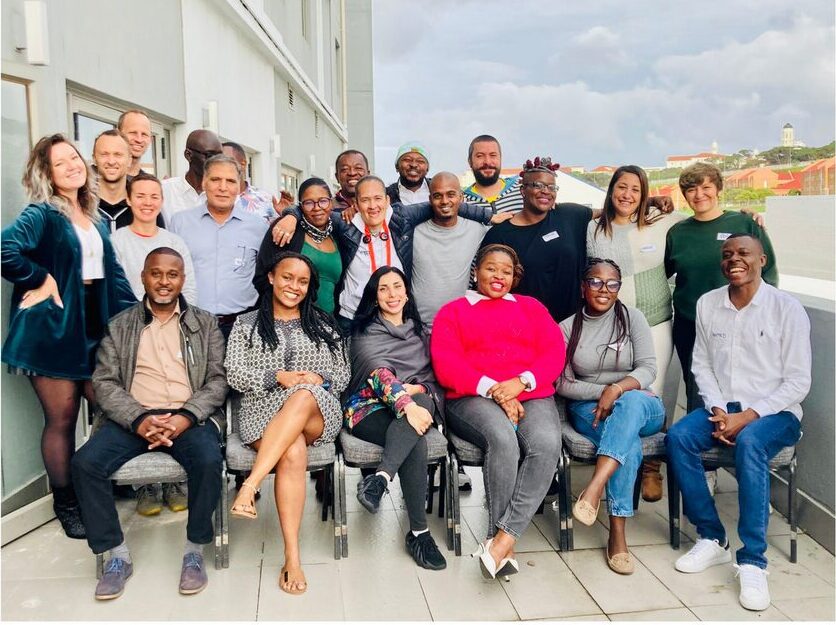
WRADA representatives attend the UPR Pre-Session in Geneva ahead of Kenya’s 49th UPR Working Group session, alongside INPUD and AfricaNPUD.
The Bill grew out of years of community-led organising. WRADA, working alongside VOCAL Kenya and The Caucus on Harm Reduction and Drug Policy Reform at country level, and supported by regional and global RCF partners including the African Network of People who Use Drugs (AfricaNPUD), the International Network of People who Use Drugs (INPUD), and the Southern African Network of People who Use Drugs (SANPUD), along with the Love Alliance (a global programme advocating for the rights and health of sex workers, LGBTQI+ people, and people who use drugs), built the evidence base and the policy proposition that the Bill formalises.
Public coverage framed it as a shift toward a health-based model, though the criminal-law framework on drug use remains untouched by the Bill itself.
In February 2025, ahead of Kenya’s 49th UPR Working Group session, WRADA spearheaded the drug-user delegation to the UPR Pre-Session in Geneva, attending alongside INPUD and AfricaNPUD. WRADA produced and submitted Kenya’s first-ever shadow report developed by and in consultation with people who use drugs, calling on the Government of Kenya to pass a community-anchored Harm Reduction Bill and integrate harm reduction within Universal Health Coverage. Kenya’s UPR Working Group review took place on 1 May 2025. The Geneva intervention preceded and informed the Bill’s parliamentary trajectory across the same calendar year.
The First Reading on 1 October 2025 is recorded in the National Assembly Order Paper and Hansard (the official verbatim record of parliamentary proceedings) for that date.
What core flexible funding made possible.
WRADA achieved this milestone while managing to sustain internal operations at a time of compounding funding pressure. Across the calendar year, the network ran an external legislative-engagement campaign, travelled to Geneva to deliver the UPR intervention, and held country-level coalitions together. All of this took place during a moment when Kenya’s harm-reduction service base was contracting under US funding withdrawal. Each of those activities required the institutional capacity that core flexible funding pays for: paid staff who hold relationships with national stakeholders and global allies; community-led governance that legitimises a public position on legislation; and the bandwidth to engage parliamentary process and UN mechanisms in the same year.
Three MENA networks strengthening community leadership, influence, and access to HIV financing across the region.

AGCS plus strengthens rights advocacy, partnerships, and community voices across Francophone West and Central Africa.
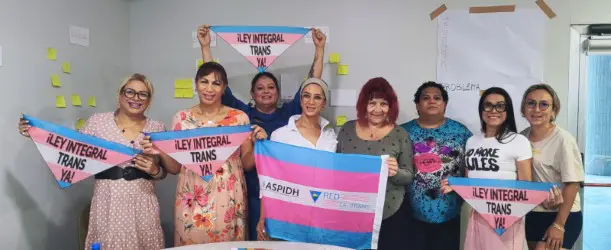
RedLacTrans responded to funding cuts and political uncertainty with collective strategy, advocacy, and resilience.

How a 20-year fight changed national labour law and why a legal victory cannot survive a funding collapse.