From Community Evidence to Parliament: Core Flexible Funding in Action
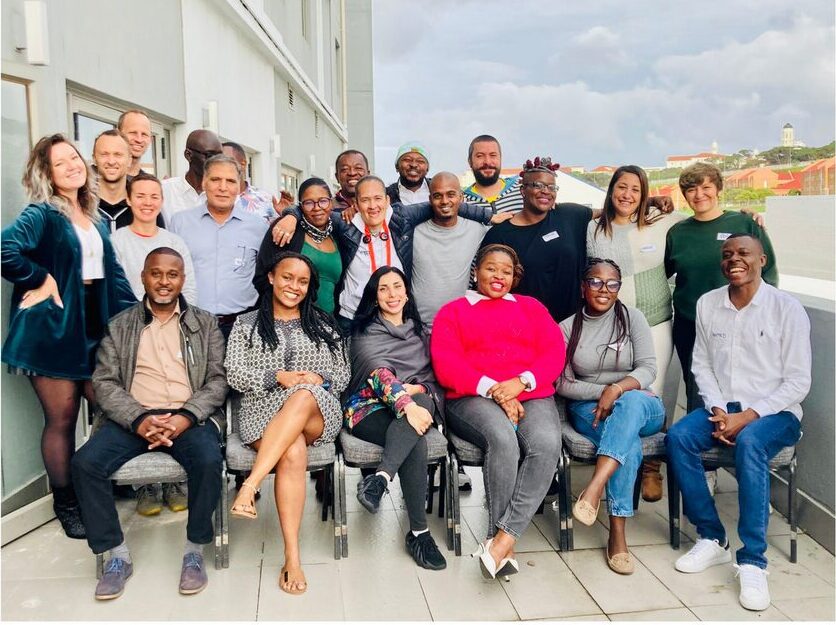
How community-led evidence and flexible funding helped move Kenya's first harm-reduction Bill from long-term advocacy into Parliament.
When an HIV funding crisis rocked the globe, the impact on transgender communities across Latin America and the Caribbean (LAC) was profound. The dismantling of USAID in January 2025 axed more than $8.3 million for community-led HIV organisations in the region. The Global Fund paused regional key population grants in May 2025, worth some $3.5 million annually.
Other funding streams simultaneously contracted. Support from the American Jewish World Service (AJWS) was reduced from $75,000 to $35,000. In Argentina, the closure of the Ministry of Women, Gender and Diversity in June 2024 ended domestically-funded programmes like Acompañar, which provided 352,300 women and LGBTI+ people with direct financial support.
The long-standing relationship with RCF was a beacon in the turbulence. “RCF has been a witness to and participant in our growth and development for over 12 years,” said the network. “This stability is what has brought us this far and will continue to propel us forward.”
RedLacTrans leaders attend and engage in discussions during the 55th General Assembly of the Organization of American States (OAS) in St. John’s, Antigua and Barbuda.
For the Red Latinoamericana y del Caribe de Personas Trans (RedLacTrans), these cuts slashed 50% of operating costs and affected 70% of activities. Nine country affiliates lost advocacy funding. After ten years of impact, the network’s flagship community-led monitoring initiative was under threat. These cuts have a devastating impact on people’s lives. The LAC region accounts for ~80% of global trans murders, and HIV prevalence is 20 times higher among the trans population.
At the same time, RedLacTrans members were confronting intensified anti-gender rhetoric, closing civic space, and escalating violence. For many organisations, this combination of funding withdrawals and mounting threats could have triggered paralysis. Instead, RedLacTrans responded with collective planning, regional coordination, and strategic determination.
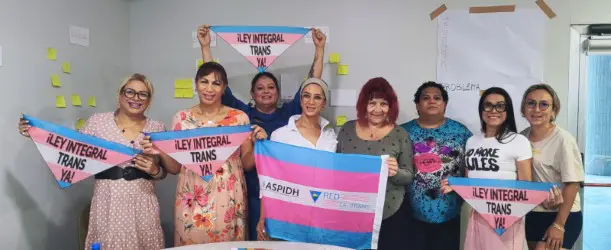
From 20–21 August 2025, RedLacTrans convened the LAC Trans Activism Meeting in Panama. Trans leaders from 16 countries came together to organise around the funding crisis. This response was governed by a 100% trans-led Board and Secretariat. The convening produced two major plans. The first was the RedLacTrans Regional Sustainability Plan 2026–2028, designed to strengthen its organisational and financial outlook.viii The second was the Subregional Political Advocacy Plan for Central America and Mexico 2026–2028, focused on violence against trans people.
The Sustainability Plan looks beyond crisis management towards long-term economic transformation. It aims to place 500 trans people into employment through labour inclusion strategies such as quotas, union partnerships, and working with companies on hiring practices. It thinks outside of conventional health-sector approaches, focusing on trans-inclusive workplaces, trans worker cooperatives, and entrepreneurship.
For RedLacTrans, economic inclusion is health policy. “We know that a person living with HIV who has access to work, education, and housing is more likely to adhere to treatment,” the network explained. The Political Advocacy Plan confronts democratic regression and organized anti-trans narratives. It seeks to strengthen trans political participation by supporting inclusion in electoral lists and developing political platforms centred on trans rights.
While developing these ground-breaking plans, RedLacTrans was fighting for survival. In 2025, it submitted more than ten funding applications to stabilize operations and diversify support.
RedLacTrans’ Panama City convening was funded by AJWS, with work carried out under the THRIVE Consortium — a global coalition of trans-led networks supported by RCF.
That investment in trans movements mattered. Flexible core funding from RCF enabled trans-led networks to strengthen organisational capacity and invest in leadership. In doing so, THRIVE laid the foundation for RedLacTrans to respond effectively when crisis hit.
At a moment when many donors stepped back, RedLacTrans stressed the importance those that remained. “The fact that RCF has continued to support RedLacTrans is of immense value to us,” the network reflected. “Both morally and materially, having RCF by our side has been invaluable, especially in a global context that is becoming increasingly hostile to trans people.”
In a year defined by funding cuts and political uncertainty, RedLacTrans refused to retreat. Rather than narrowing its ambitions, it transformed crisis into opportunity for a more sustainable future.
How community-led evidence and flexible funding helped move Kenya's first harm-reduction Bill from long-term advocacy into Parliament.

Three MENA networks strengthening community leadership, influence, and access to HIV financing across the region.

AGCS plus strengthens rights advocacy, partnerships, and community voices across Francophone West and Central Africa.

How a 20-year fight changed national labour law and why a legal victory cannot survive a funding collapse.