From Community Evidence to Parliament: Core Flexible Funding in Action

How community-led evidence and flexible funding helped move Kenya's first harm-reduction Bill from long-term advocacy into Parliament.
Human rights reform in detention rarely begins in a courtroom. It begins with documentation, the patient recording of who is held, in what conditions, and with what access to care. Since 2019, with continuous RCF core funding, the European Prison Litigation Network (EPLN) and its Ukrainian member, the former-prisoner-led NGO Protection for Prisoners of Ukraine, have documented healthcare and rights in Ukrainian prisons without interruption, including after the 2022 full-scale invasion.
In 2025 alone, Protection for Prisoners of Ukraine conducted seven prison monitoring visits, drawing on public records, statistical materials and direct observation. That evidence is the foundation on which EPLN’s 2025 advocacy was built.
EPLN carried that evidence into every level of the European and UN human rights system. It filed a Rule 9.2 communication to the Committee of Ministers of the Council of Europe on execution of the Logvinenko v. Ukraine group of judgments, submitted a third-party intervention to the European Court of Human Rights in Panasenko and O. v. Ukraine on failures in medical release for seriously ill prisoners, lodged a shadow report to the UN Committee against Torture for its examination of Ukraine, and made a targeted submission to EU DG ENEST for the 2025 Ukraine report. A holistic strategy across domestic, European and UN channels turned community monitoring into coordinated legal pressure.

Group photo of members attending the Prison Health and Rights Consortium (PHRC) Board meeting.
The results are structural and named. In Logvinenko v. Ukraine, the Committee of Ministers’ decision integrated EPLN’s core recommendations, including transferring responsibility for prison healthcare to the Ministry of Health, improving the medical-release procedure, and strengthening the preventive remedy; it also urged the authorities to cooperate closely with the Ombudsperson and civil society on prison-healthcare reform.
In Benyukh v. Ukraine, a case EPLN has represented since 2020, the European Court of Human Rights delivered a 2025 judgment, signalled by a press release, recognising states’ obligation to protect prisoners’ dental health and naming the combination of legislative, administrative and financial obstacles that had denied it. The UN Committee against Torture’s concluding observations on Ukraine reflected EPLN’s submission, including measures against torture impunity and improvements in prison healthcare
Because all Council of Europe states are bound by the Court’s jurisprudence, these outcomes reach beyond Ukraine, consolidating the independence of medical professionals in detention and Ministry-of-Health responsibility for prison healthcare into the body of international standards. EPLN identifies the decisive enabling factor as a full-time legal advisor on Ukraine, in post since 2022, who coordinated fieldwork with Ukrainian partners and built the litigation strategy.
The work rests on a wider alliance: the Prison Health and Rights Consortium, formed in 2018, unites people who use drugs, people with experience of incarceration, harm reduction specialists and prison-health professionals, while EPLN’s prison-law resources reached 301 state authorities across Europe in 2025, carrying these standards to the institutions that must implement them.
How community-led evidence and flexible funding helped move Kenya's first harm-reduction Bill from long-term advocacy into Parliament.

Three MENA networks strengthening community leadership, influence, and access to HIV financing across the region.

AGCS plus strengthens rights advocacy, partnerships, and community voices across Francophone West and Central Africa.
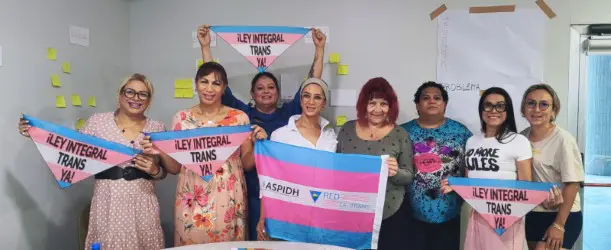
RedLacTrans responded to funding cuts and political uncertainty with collective strategy, advocacy, and resilience.